
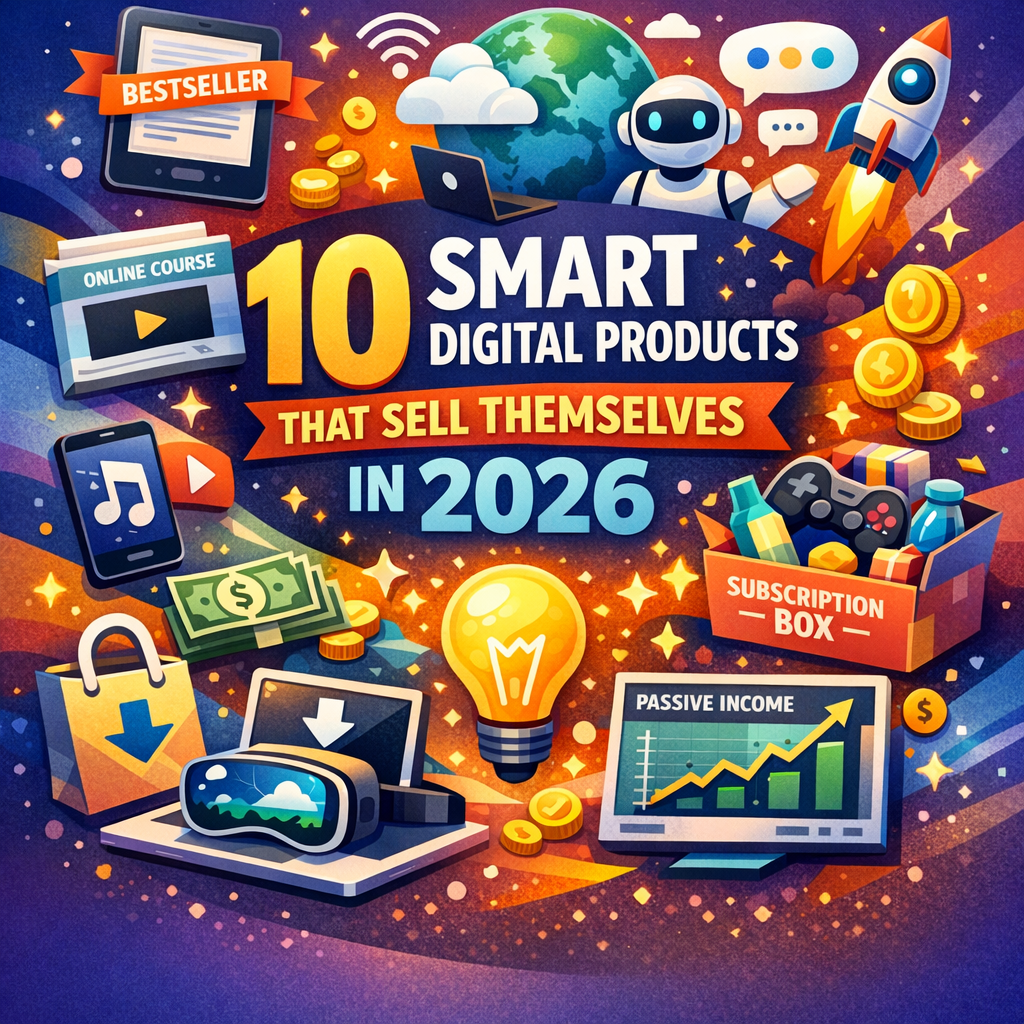
The Power of Digital Products in the Modern Economy
In 2026, digital products stand as one of the most lucrative and salable online business models. They offer creators the ability to generate significant passive income with relatively low ongoing effort. Unlike physical products, digital goods need no inventory, shipping, or manufacturing. Once created, they can be sold repeatedly with minimal extra cost. This comprehensive guide will walk you through identifying digital products. It will also guide you in creating, marketing, and selling them according to Google and AdSense standards. This lets you build a sustainable online income stream from anywhere in the world. Digital products are a cornerstone of building sustainable online passive income.
Why Digital Products Are a Smart Online Business Choice for 2026
The digital product market continues to expand rapidly. This growth is driven by increasing consumer comfort with online purchases. Additionally, there is a growing demand for instant access to solutions. Key advantages include:
- High Profit Margins: After first creation, each sale is almost pure profit.
- Global Scalability: Sell to customers worldwide 24/7 without logistical constraints.
- Passive Income Potential: Products can generate revenue while you sleep, travel, or work on other projects.
- Low Overhead Costs: No storage, packaging, or shipping expenses.
- Flexible Creativity: Create products aligned with your skill, passion, and audience needs.
- Direct Customer Relationships: Build your email list and community while providing value.
Phase 1: Foundation – Identifying Opportunities and Planning
1. Mindset for Digital Product Success
- Solve Real Problems: Successful products handle specific pain points or desires.
- Value Over Hype: Focus on delivering genuine transformation rather than flashy marketing.
- Iterative Improvement: Launch a basic workable product, gather feedback, and enhance based on real user experience.
- Long-Term Vision: View each product as part of an ecosystem that builds your authority and audience. Sell digital products directly with Gumroad.
2. Top Digital Product Categories for 2026
Analyze these high-demand categories to find your profitable niche:
- Educational Products:
- Online courses and workshops
- E-books and comprehensive guides
- Tutorial video libraries
- Creative Resources:
- Design templates (Canva, Photoshop, social media)
- Digital art, stock photos, and illustrations
- Fonts and design assets
- Productivity Tools:
- Notion templates, planners, and dashboards
- Spreadsheet systems for budgeting, tracking, or analysis
- Printable organizational systems
- Software and Tools:
- Mobile apps or web applications
- Browser extensions
- Code snippets and plugins
- Entertainment and Lifestyle:
- Digital patterns for crafts, knitting, or sewing
- Recipe collections and meal planning systems
- Gaming assets or mods
3. Market Research and Validation
Before investing time in creation, confirm your product idea:
- Analyze Competition: What similar products exist? How can you improve or differentiate?
- Survey Your Audience: Use email lists, social media polls, or direct conversations to gauge interest.
- Search Volume Analysis: Use tools like Google Keyword Planner to assess demand for related topics.
- Pre-Sell or Titlist: Test interest by offering early bird pricing or collecting emails before full creation.
Phase 2: Creation – Developing High-Value Digital Products
1. Choosing Your Creation Tools
Select tools that match your product type and skill level:
- E-books and Guides: Canva, Adobe InDesign, or even Google Docs with professional formatting
- Online Courses: Teachable, Thinkific, Podia, or Kajabi for hosted platforms
- Templates and Designs: Figma, Canva Pro, Adobe Creative Suite
- Software and Apps: Bubble.io for no-code solutions, or traditional coding languages
2. Content Development Best Practices
- Focus on Transformation: Clearly define what users will achieve by consuming your product.
- Professional Presentation: Invest in clean design, proofreading, and quality formatting.
- Modular Structure: Break content into digestible sections for better learning retention.
- Multi-Format Delivery: Consider offering products in multiple formats (PDF, video, audio) for different learning preferences.
3. Ensuring Google and AdSense Compliance
Digital products must meet quality standards to be promoted effectively:
- Original Content: All material must be your own creation or properly licensed.
- Precise Claims: Avoid over promising results. Use realistic “before and after” scenarios.
- Transparent Pricing: Clearly state what’s included and any extra costs.
- Clear Refund Policy: Set up and communicate fair refund terms.
Use freelance writing skills to create compelling sales pages and product content.
Phase 3: Platform and Delivery – Where and How to Sell
1. Choosing Your Sales Platform
- All-in-One Platforms: Teachable, Thinkific, or Podia handle hosting, payments, and delivery
- Marketplaces: Etsy (for creative digital goods), Gumroad, or SundOwn
- Self-Hosted Solutions: WordPress with WooCommerce or LearnDash for total control
- Hybrid Approach: Use multiple platforms to reach different audiences
2. Setting Up Your Sales Funnel
A strategic funnel maximizes conversions:
- Lead Magnet: Offer a free mini-product (checklist, template, or guide) to build your email list
- Nurture Sequence: Educate leads about the problem your product solves through email automation
- Sales Page: Create a compelling, advantage-focused page that addresses objections
- Ispell Opportunities: Offer complementary products or enhanced versions after buy
- Post-Buy Nurturing: Onboard customers and encourage implementation
3. Delivery and Access Management
- Instant Access: Set up automated delivery upon payment confirmation
- Secure Distribution: Use platforms with download protection to prevent unauthorized sharing
- Updates and Support: Set up systems for product updates and customer inquiries
- Community Access: Consider adding a private group for customers to enhance value
Phase 4: Marketing – Driving Sales and Building Authority
1. Content Marketing Strategy
- Educational Content: Create blog posts, videos, or podcasts that tackle the problems your product solves
- Demonstrations and Case Studies: Show your product in action with real results
- SEO Improvement: Target relevant keywords in your content to attract organic traffic
- Guest Contributions: Write for established publications in your niche to build credibility
2. Social Proof and Trust Building
- Testimonials and Reviews: Collect and prominently show customer success stories
- Free Samples: Offer limited previews or trial versions
- Money-Back Guarantee: Reduce buying risk with clear refund policies
- Authority Building: Share your skill through content to build trust
3. Paid Advertising (When Appropriate)
- Facebook/Instagram Ads: Effective for visually appealing products with clear benefits
- Pinterest Promoted Pins: Ideal for creative, visual, or lifestyle products
- Google Ads: Target users actively searching for solutions your product provides
- YouTube Sponsorship: Partner with creators whose audience matches your target market
4. Email Marketing Automation
- Welcome Sequence: Introduce new subscribers to your skill
- Nurture Campaigns: Educate about problems and solutions over time
- Launch Sequences: Build excitement for new products or offers
- Re-engagement Campaigns: Win back inactive subscribers or past customers. Promote your digital products through a YouTube channel to reach a wider audience.
Phase 5: Scaling and Improvement – Growing Your Digital Product Business
1. Analyzing Performance Metrics
Track key indicators of success:
- Conversion Rates: Percentage of visitors who buy
- Customer Acquisition Cost: Marketing spend per new customer
- Lifetime Value: Total revenue from an average customer
- Refund Rates: Find potential product or expectation issues
2. Product Expansion Strategies
- Bundling: Combine complementary products for increased value
- Tiered Offerings: Create different pricing levels with varying features
- Subscription Models: Offer ongoing access with regular updates or new content
- Licensing: Allow other businesses to use your products with proper agreements
3. Building a Product Ecosystem
- Create multiple products that serve the same audience at different journey stages
- Develop products that naturally lead to one another (entry-level to advanced)
- Consider membership models for ongoing community and content access
Combine digital products with affiliate marketing for multiple income streams from the same audience.
Compliance and Ethical Considerations for 2026
1. Legal Requirements
- Terms of Use: Clearly define how customers can and can’t use your products
- Privacy Policy: Explain how customer data is collected, used, and protected
- Intellectual Property: Protect your creations with proper copyright notices
- Tax Compliance: Understand sales tax requirements for digital products in regions you sell
2. AdSense and Google Compliance
- No Misleading Claims: Avoid “get rich quick” or unrealistic outcome promises
- Transparent Pricing: Show all costs clearly without hidden fees
- Quality Content: Make sure products deliver genuine value as advertised
- Secure Transactions: Use reputable payment processors with proper security
3. Building Sustainable Customer Relationships
- Over-Deliver on Value: Exceed customer expectations when possible
- Responsive Support: Handle questions and concerns promptly
- Continuous Improvement: Update products based on customer feedback
- Community Building: Foster connections among your customers
Common Challenges and Solutions
- Product Creation Overwhelm: Start small with a basic workable product rather than perfection.
- First Lack of Audience: Create products solving problems you’ve personally experienced while building audience at the same time.
- Pricing Uncertainty: Research competitor pricing, test different price points, and adjust based on conversion data.
- Marketing Fatigue: Diversify across multiple channels rather than relying on one method.
- Copycat Products: Focus on building your personal brand and authority, which competitors can’t easily replicate. Research demand for your digital product topics with Google Keyword Planner.
Conclusion: Your Digital Product Journey
Creating and selling digital products signifies one of the most efficient paths to online income in 2026. You can combine your skill with strategic creation. Add marketing and customer service as well. This way, you can build a business that generates passive income. At the same time, you make a genuine impact. The digital landscape continues to reward those who offer real solutions to real problems.
Your 90-Day Launch Timeline:
- Weeks 1-2: Confirm your product idea through audience research
- Weeks 3-6: Create your basic workable product
- Weeks 7-8: Set up sales platform and delivery systems
- Weeks 9-10: Develop first marketing content and launch sequence
- Weeks 11-12: Launch to your existing audience
- Weeks 13+: Gather feedback, improve, and expand your product line
Remember that every successful digital product creator started with their first imperfect offering. The most important step is to start. Create something that helps people. Price it fairly, and share it with those who need it. Your skill has value, and in today’s digital world, that value can become a sustainable online business.
Call to Action:
Want to start earning online safely?
Choose one method and stay consistent. Explore more beginner-friendly guides on Earn Smart Guide. This will help you build real income step by step.
Disclaimer: This article is for informational purposes only. Earning results depend on the time and effort of each user. Always follow the instructions of the task carefully and be careful while sharing your personal information on any platform.
About the Author:
Earn Smart Guide is a writer focused on Online Earning tips. The information provided is based on research and experience. It is intended for general informational purposes only.
Frequently Asked Questions (FAQ) About Digital Products
What are the most profitable digital products to create?
Online courses, comprehensive e-books, professional templates (Notion, Canva), software tools, and premium guides in high-demand niches like finance, tech, health, and business are among the most profitable digital products.
How much does it cost to create a digital product?
Costs can range from $0 to $500+. You can start with free tools (Canva, Google Docs), but may invest in paid software, stock assets, or professional editing as you scale. The primary investment is your time, not money.
Where is the best place to sell digital products?
Popular platforms include Teachable and Thinkific for courses, Gumroad for diverse products, Etsy for creative goods, and self-hosted WordPress with WooCommerce for full control. Choose based on your product type and technical comfort.
Do I need a website to sell digital products?
Not necessarily initially—you can use marketplace platforms like Gumroad or Etsy. However, a dedicated website builds brand authority, captures email leads, and gives you full control over pricing and customer relationships long-term.
How do I protect my digital products from piracy?
Use platform download protection, watermark content, offer personalized versions, create member-only access areas, and focus on building a loyal community. Some piracy is inevitable, but loyal customers will pay to support you directly.
Pingback: Social Media Management Career 2026 – Earn Online
Pingback: Earn Money From Mobile Phone – 2026 Guide
Pingback: Best Online Earning Ideas for Women Using Mobile – 2026
Pingback: Online Earning for Housewives Without Investment – 2026 Guide
Pingback: Online Earning With AI Tools for Beginners – 2026 Guide